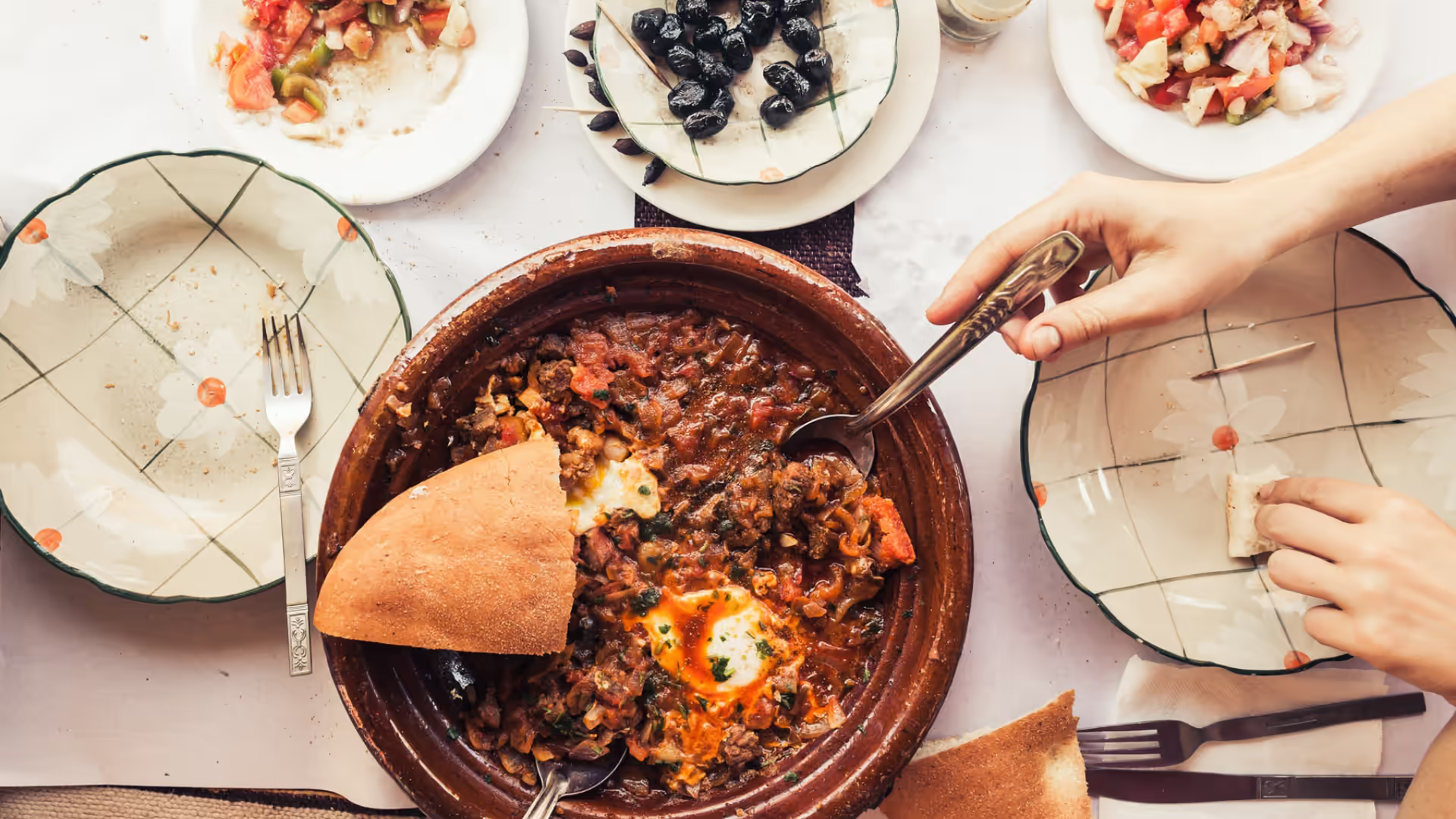
The best food in Morocco is cheap, specific and usually not in a restaurant with a picture menu. Tajine and couscous are real, but they are the floor, not the ceiling — and couscous is a Friday thing, not an every-night thing. Here is what to eat, where people who live here actually eat it, and what each thing should cost in 2026.
What should you actually eat in Morocco?
Order past the two dishes every menu leads with. The list below is what I eat at home and on the road, with the places each one belongs to — because Moroccan food is regional, and asking for the local thing gets you the good version.
| Dish | What it is | Where it is best | Price (MAD) |
|---|---|---|---|
| Tajine | Slow-cooked stew in a clay cone — lamb and prune, chicken and lemon, kefta and egg | Everywhere; roadside stops on the desert road | 40–70 |
| Couscous | Steamed semolina under seven vegetables and meat. A Friday lunch, at home | Guesthouses and family tables, Fridays | 50–90 |
| Tangia | Lamb sealed in a clay urn and cooked slowly in the ashes of the hammam furnace | Marrakech only — it is a Marrakchi dish | 60–100 |
| Harira | Tomato, lentil and chickpea soup; the bowl that breaks the fast in Ramadan | Any hole-in-the-wall, evenings | 5–15 |
| Bissara | Split-pea puree with olive oil and cumin — breakfast of the working morning | Northern cities, Fes, mountain souks in winter | 5–12 |
| Rfissa | Shredded msemen under chicken, lentils and fenugreek | Homes; some Fes and Rabat restaurants | 60–110 |
| Mechoui | Whole slow-roasted lamb, pulled apart by hand with cumin and salt | Marrakech’s Mechoui Alley, off Jemaa el-Fnaa | 60–120 per portion |
| Grilled sardines | Landed that morning, grilled over coals, eaten with bread | Essaouira port, Agadir, Safi | 25–50 |
| Msemen & beghrir | Flaky square pancake; honeycomb semolina pancake — with honey and butter | Morning street carts, everywhere | 3–10 |
Where do locals eat, and how do you spot it?
- The one-pot places. A counter, four tables, one or two dishes cooked that morning and nothing else. No menu, no English, no problem — point at the pot.
- Buy meat, then have it grilled. In market grill alleys you choose at the butcher, pay by weight, and the stall next door cooks it for a few dirhams. This is the cheapest good meal in the country.
- Souk days. Weekly markets feed the people who came to trade — the food is fast, seasonal and priced for locals. The Rissani souk is the one I send people to.
- Walk away from the square. Two streets back from any main square, the same tajine costs half. Picture menus and a man waving you in are both warnings.
What does food cost per day?
| How you eat | Per day (MAD) | Roughly |
|---|---|---|
| Street food and one-pot places | 60–100 | €6–€10 |
| Mixed — local lunches, sit-down dinners | 150–250 | €14–€23 |
| Restaurants and riad dinners | 350–600 | €32–€55 |
Tea is the constant: mint tea runs 5–15 MAD and is poured everywhere, sweet unless you say bla sukkar — without sugar. Coffee culture is real too; nous-nous is half espresso, half milk.
Can vegetarians and vegans eat well here?
Yes, better than the reputation suggests — vegetable tajine, bissara, zaalouk (smoked aubergine), taktouka, lentils, msemen, olives, bread, fruit. Two cautions worth knowing: a “vegetable” tajine is sometimes built on meat stock, and bread is often the only thing on the table that is certainly vegan. Say bla lhem (without meat) and, if it matters, ask whether the broth is khodra — vegetable.
Will you get sick, and what about water?
Drink bottled or filtered water — 6–10 MAD for 1.5 litres, and carry a refillable bottle with a filter if you would rather not add to the pile. Busy stalls with high turnover are safer than quiet ones; food that is cooked hot in front of you is safest of all. Peel fruit you did not wash yourself. That is genuinely the whole list; the wider what-to-worry-about picture is in the honest safety guide.
What do you eat in the desert?
Camp food is simpler than the brochures imply and better than you expect: harira or a salad spread, a tajine cooked over gas or coals, bread baked in sand or on a griddle, orange or melon after. Vegetarian is easy to arrange if you flag it when you book — see the Sahara guide for what a camp night actually involves. If you are trekking rather than sleeping at a fixed camp, the food question becomes a water-and-weight question; that is covered in the trekking kit list.
A few rules that make eating here easier
- Bread is the utensil. Tear with the right hand, scoop from your side of the dish, do not dig for the meat — it gets divided at the end.
- Lunch is the big meal, roughly 13:00–15:00. Dinner runs late, from 20:00.
- In Ramadan many places close by day and the streets turn into one enormous shared dinner at sunset. Travelling then is fascinating, not difficult — but check hours.
- Fridays: couscous. Ask your guesthouse the day before and you will be handed the real version rather than a restaurant one.
- If someone insists you join them, they mean it. Bring pastries or fruit if you go.
Want to go further than eating it? A market-and-cooking morning is the single best half-day in the country, and it is easy to arrange — that and other hands-on options are in the heritage guide. Timing matters too: what is on the plate changes with the season, which the month-by-month guide tracks.
What is the national dish of Morocco?
Couscous, eaten at Friday lunch after prayers, is the closest thing to a national dish — though tajine is what most visitors eat most often. Tangia in Marrakech and rfissa in the north are the regional dishes worth hunting down.
Is Moroccan food spicy?
Aromatic rather than hot. Cumin, ginger, saffron, cinnamon and ras el hanout carry the flavour; chilli heat is added at the table with harissa, so you control it. Children generally eat everything on a Moroccan menu happily.
Can vegetarians eat well in Morocco?
Yes — vegetable tajine, bissara, zaalouk, lentils, msemen and bread cover you everywhere. Ask whether a vegetable tajine is built on meat stock, and say bla lhem, without meat, when you order.
Is street food safe in Morocco?
Broadly yes if you pick busy stalls with fast turnover and food cooked hot in front of you. Drink bottled or filtered water, peel fruit you have not washed, and treat quiet stalls with pre-cooked food with more caution.
How much should you budget for food per day?
Around 60 to 100 MAD a day if you eat at street stalls and one-pot places, 150 to 250 for a mix of local lunches and sit-down dinners, and 350 to 600 if you eat in restaurants and riads.
Food is one strand of the travel guides; the country-wide overview is the Morocco travel guide.