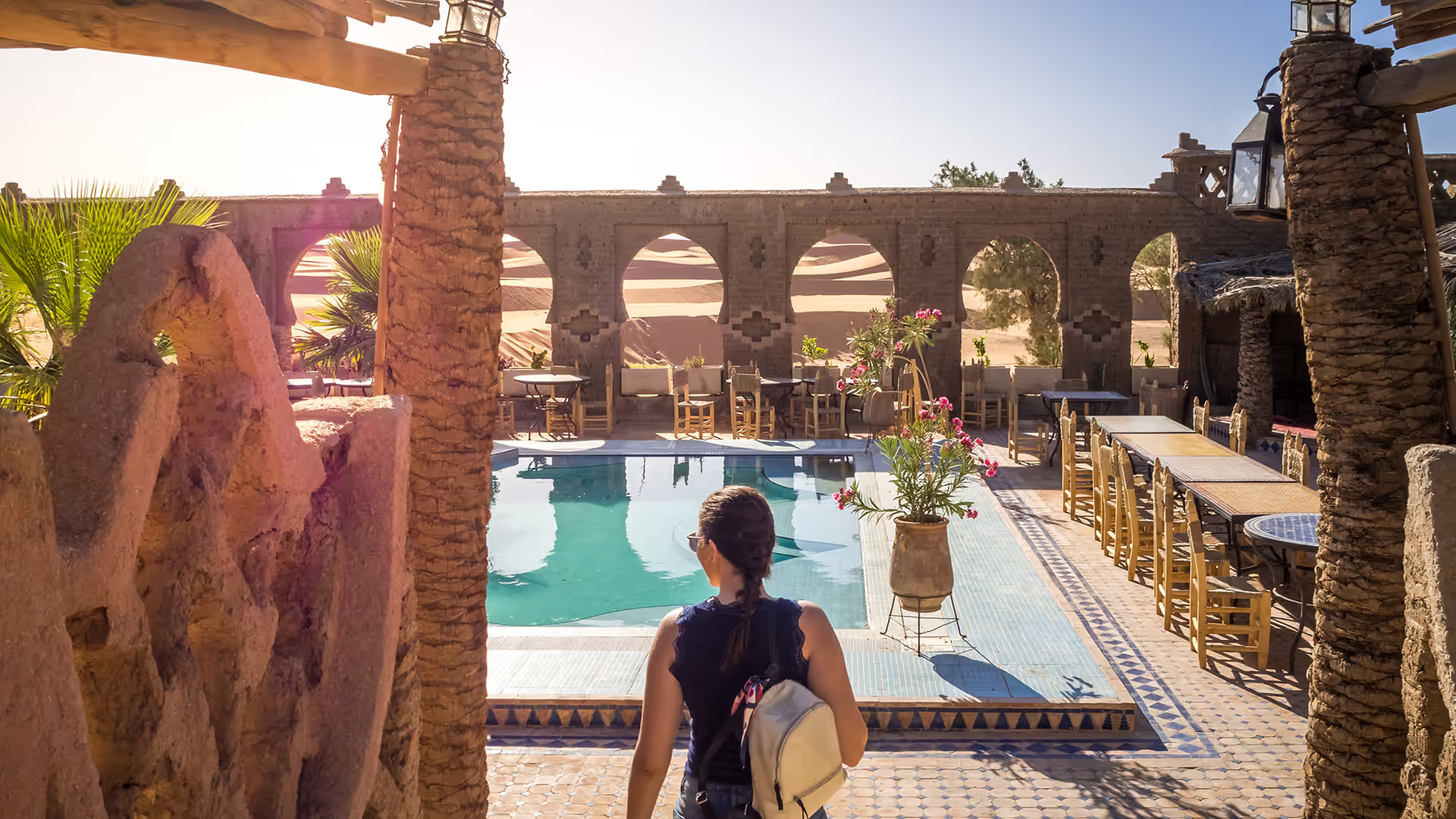
Skoura is a working palm oasis 40 km east of Ouarzazate on the Road of a Thousand Kasbahs — roughly 4,000 hectares of date palms hiding some of the best-preserved kasbahs in Morocco, including Amridil, the one that was printed on the old 50-dirham note. Most desert tours drive past it or give it twenty minutes. Here is what a proper stop looks like — two to three hours, or a night if you travel slowly — with real prices and the walking route.
Where is Skoura, and when do you pass it?
Skoura sits on the N10 between Ouarzazate and the Dades Valley — which means if you are doing the classic Marrakech to Merzouga road, you drive through it on day one or two whether you know it or not. The palmery was founded in the 12th century under the Almohads and it is still farmed: dates overhead, olives and almonds at eye level, alfalfa and vegetables on the ground — the three-storey agriculture every southern oasis runs on.
| From | Distance | Time |
|---|---|---|
| Ouarzazate | 40 km | 40 min |
| Marrakech | ≈230 km | 4–5 h over the Tizi n’Tichka |
| Dades Gorge (Boumalne) | ≈75 km | 1 h |
| Ait Benhaddou | ≈70 km | 1 h 10 |
Kasbah Amridil: the one you pay for, and it earns it
Amridil is a 17th-century fortified house of the Nassiri family, still partly lived in, and the best-kept kasbah interior on this road — which is exactly why it ended up on the old 50-dirham banknote and in more than one film. Entry runs 50–70 MAD depending on whether you take the guided visit (take it — the guide is the point), doors open roughly 8 am to sunset, and a visit takes 30–45 minutes: olive press, bread ovens, water system, the roof view over the palms.
Unlike Ait Benhaddou — which is magnificent but has become a stage — Amridil still feels like what a kasbah actually was: a family stronghold running a farm. If you only have energy for one paid interior between Marrakech and the dunes, this is the one I send people to. The wider story of these buildings — who built them and why they cluster here — is in the Tafilalt kasbahs guide.
The other kasbahs — free, crumbling, and better for it
- Kasbah Ait Ben Moro — 18th century, restored into a small hotel at the palmery’s edge; walk in for a mint tea on the terrace even if you sleep elsewhere
- Kasbah Ait Abou — the tallest in the palmery, deep in the groves with a garden around it; viewable from the path
- Dar Ait Sidi el-Mati — crumbling grandly among the palms; photograph it from outside, mud brick does not forgive climbing
- Marabout of Sidi M’Barek — the white shrine the walking loop bends around; respectful distance, no entry for non-Muslims
None of these charge entry because none of them are attractions — they are the furniture of a lived-in oasis, which is the entire charm of Skoura over its famous neighbour.
Walking the palmery: the two-hour loop
Park (or get dropped) at Amridil and walk the dirt tracks north-east through the groves — Amridil → Sidi M’Barek → Kasbah Ait Abou and back makes a lazy 6–7 km loop, flat the whole way, two hours with stops. You will cross khettaras — the underground channels that have moved water here for eight centuries — and share the path with donkeys doing actual work. A local guide costs around 100–150 MAD for the loop and turns plants into stories; bikes rent for 50–100 MAD from the guesthouses if you would rather roll it.
Time it right and the palmery feeds you: October is the date harvest, when the whole oasis climbs its own trees, and February turns the almond understorey white with blossom. Both beat any month of high summer, when the groves are the only bearable place in the province anyway — the full calendar is in the best-time guide.
The birds — Skoura’s quiet speciality
Neither the tour brochures nor most guides mention it, but Skoura is one of the better birding stops in southern Morocco: bee-eaters, bulbuls, olivaceous warblers and little owls work the groves, and the El Mansour Eddahbi reservoir just west of the palmery pulls in water birds — ruddy shelduck, herons, sometimes flamingos — that have no business in a desert province. Bring binoculars on the loop even if you are not a birder; if you are, pair it with the Merzouga species guide for the desert end of the same trip.
How to visit without a tour
- CTM or Supratours bus Marrakech → Ouarzazate (≈4½ h, 90–120 MAD) — the same buses covered in the getting-around guide
- Shared grand taxi Ouarzazate → Skoura from the main rank, 15–20 MAD a seat, 40 minutes, leaves when full
- Walk or ask the driver for “Kasbah Amridil” — it is signed 2 km off the N10
- Onward: grand taxis run east to Boumalne du Dades all day — you are back on the gorge-and-desert road without ever having joined a tour
On a standard 3-day desert tour you will get Skoura as a photo stop at best — if the palmery matters to you, say so when booking or go independent and give it the night.
Sleeping and eating in the oasis
Skoura at night is the argument for staying: the tour convoys leave by 4 pm, and the palmery goes back to being a farm under an enormous sky. Family guesthouses inside the groves run 200–400 MAD with breakfast; restored kasbahs and boutique places 500–1,200 MAD. Dinner is wherever you sleep — order the vegetable tajine and ask for the house dates, which will be better than any you have bought. What the dishes are and what they should cost is in the Moroccan food guide.
Is Skoura Oasis worth visiting?
Yes — if you give it two hours or more. It has the best-preserved kasbah interior on the Ouarzazate road (Amridil), a genuinely working palmery you can walk, and a fraction of Ait Benhaddou’s crowds. As a five-minute photo stop it is wasted.
How much does Kasbah Amridil cost to visit?
Around 50 to 70 MAD depending on whether you take the guided visit, open roughly 8 am to sunset. The visit takes 30 to 45 minutes and the guide is worth it — the building only makes sense with the farming and water systems explained.
Can you visit Skoura without a tour?
Easily. Take a CTM or Supratours bus from Marrakech to Ouarzazate, then a shared grand taxi to Skoura for 15–20 MAD a seat. Onward taxis run east to the Dades all day, so the oasis slots into an independent desert route with no backtracking.
How long do you need in Skoura?
Two to three hours covers Amridil plus the palmery loop on foot. Staying one night is the better version — guesthouses in the groves run 200–400 MAD and the oasis empties of visitors by late afternoon.
When is the best time to visit Skoura?
October for the date harvest, February for almond blossom, and October to April for walking weather generally. Summer afternoons hit 38–44°C — the palm shade makes mornings workable, but plan around it.
Skoura is one stop on the desert road — the whole country is mapped in the Morocco travel guide, and where the road ends up in the Sahara guide.