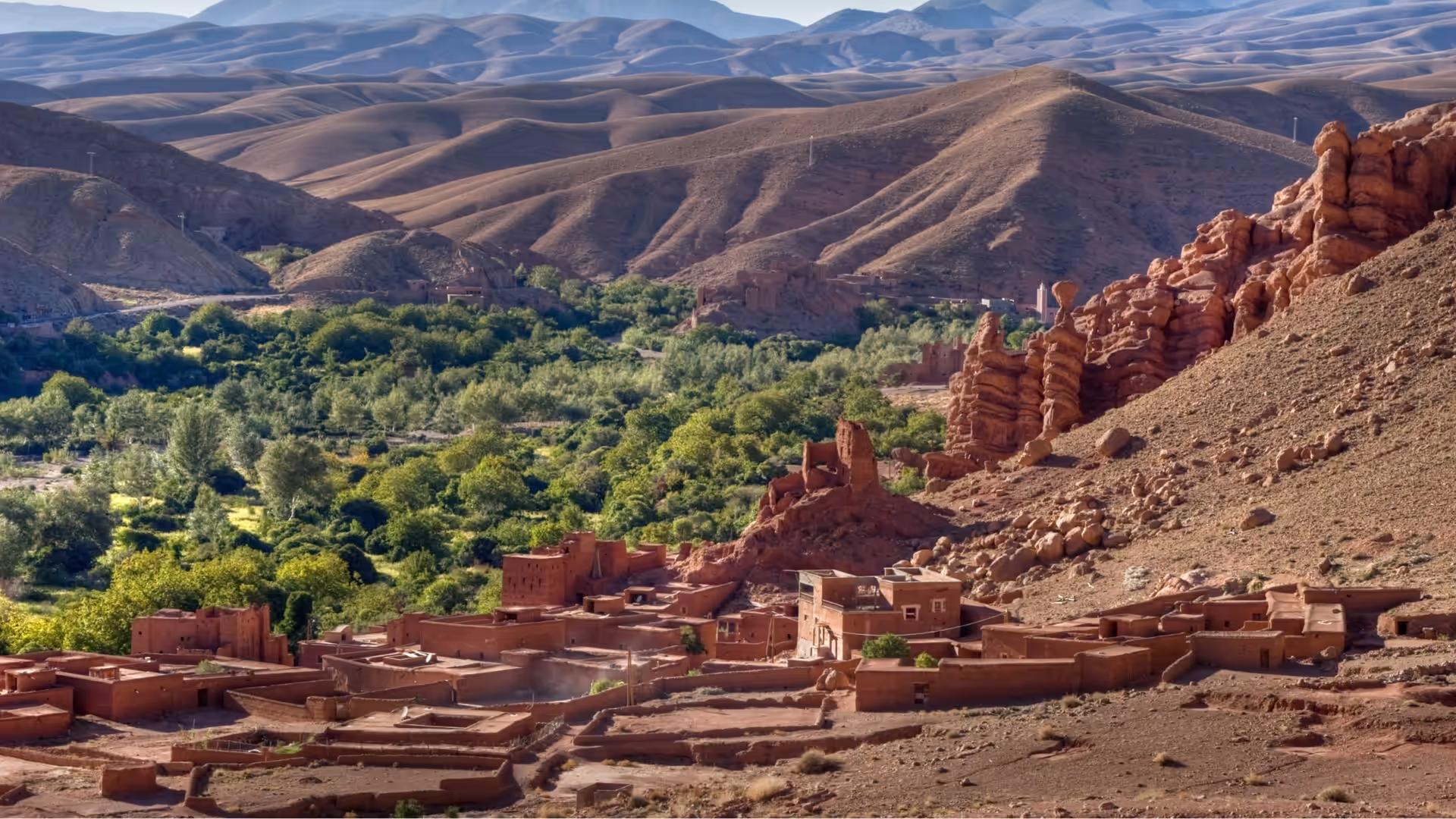
The Amazigh are the indigenous people of North Africa — in Morocco, the people who were here before Rome, before Arabic, before the borders. You will hear them called Berbers; the word came from the Latin barbarus, and many prefer Amazigh, plural Imazighen, which is usually translated as “free people”. If you travel in the Atlas, the Rif, the Souss or the southern valleys, you are travelling in Amazigh country — and knowing a little changes what you see.
Who are the Amazigh, in one paragraph?
Not a tribe and not a minority in the usual sense: a family of peoples spread from the Atlantic to the Siwa oasis in Egypt, with their own languages, alphabet, calendar, architecture and law. Estimates of how many Moroccans speak an Amazigh language today vary from roughly a quarter to a third; the share with Amazigh ancestry is far larger, and for most families here the two identities — Amazigh and Moroccan Arab — are woven together rather than opposed.
What language do they speak, and what is that script?
Tamazight, in several varieties that are not always mutually intelligible. Three matter in Morocco:
- Tarifit — the Rif, the northern mountains behind Al Hoceima and Nador
- Central Atlas Tamazight — the Middle Atlas and the high central massif, Khenifra to the Dades
- Tachelhit — the largest by speakers: the Souss plain, the High Atlas above Taroudant, and the Anti-Atlas around Tafraout
The angular letters you see on road signs, schools and shopfronts are Tifinagh, standardised in 2003 and now used officially. Tamazight became an official language of Morocco in the 2011 constitution, alongside Arabic — which is why the signage changed in the years after. Two words carry you a long way in the mountains: azul, hello, and tanmirt, thank you. Both get a real smile.
What will you actually see on the road?
| What | What you are looking at | Where |
|---|---|---|
| Ksour and kasbahs | Fortified villages and family strongholds built of pise — rammed earth, straw and stone | Dades, Draa and Todra valleys; the Tafilalt |
| Agadir | Collective granary above a village — shared storage governed by written village law | Anti-Atlas, around Tafraout and Igherm |
| Carpets | Motifs read as protection, fertility, water and lineage — not decoration | Taznakht, Ait Ouaouzguite, Middle Atlas cooperatives |
| Ahwash and ahidous | Village line-dances with frame drums, sung call and response, often all night | Souss and High Atlas (ahwash); Middle Atlas (ahidous) |
| Moussem | Annual gathering — part pilgrimage, part market, part festival | Village calendars through summer; Imilchil in September |
| Yennayer | Amazigh New Year, 13–14 January — a national public holiday in Morocco since 2024 | Nationwide, strongest in Amazigh-speaking regions |
Where do travellers meet Amazigh culture properly?
- High Atlas villages. Ait Bougmez, Imlil, the Ourika valleys — walk between villages, sleep in a family gite, eat what the household eats.
- Anti-Atlas, around Tafraout. Painted granite, almond terraces, agadirs in the cliffs, and the least touristed mountain country in the country.
- The southern valleys. The kasbah architecture on the desert road is Amazigh building, not scenery — the kasbahs of the Tafilalt are the clearest lesson in it.
- Weekly souks. Market day in a mountain town is the most honest cultural encounter available, and it costs nothing — the Rissani souk is the one to build a morning around.
- Weaving cooperatives. Buy from the women who made the carpet. Ask what the symbols mean and you will get a half-hour answer worth more than the rug.
How do you visit respectfully?
- Ask before photographing people — especially older women, some of whom carry facial tattoos from a practice that has largely ended and is not a photo opportunity.
- Say Amazigh. Berber is not a slur and plenty of people use it themselves, but Amazigh is the name chosen from the inside.
- Pay directly. Cooperatives, village guides, muleteers and gite families keep the money in the valley. A guided walk hired locally costs a fraction of a city-booked tour.
- Accept the tea. Hospitality here is an obligation on the host and refusing it is the one genuinely rude move available to you.
If you want this hands-on rather than observed — a loom, a kitchen, a drum, a night in a kasbah — the options are laid out in the heritage guide. The food side of the same culture, from tagoula to the Friday couscous, is in the Moroccan food guide. And if you are still shaping the route, the country-wide picture is the Morocco travel guide.
Amazigh or Berber — which word should you use?
Amazigh, plural Imazighen, is the name the people use for themselves and is usually translated as free people. Berber comes from the Latin barbarus and arrived from outside; many Moroccans still use it casually, but Amazigh is the respectful default for a visitor.
What language do the Amazigh speak in Morocco?
Tamazight, in three main varieties: Tarifit in the Rif, Central Atlas Tamazight in the Middle Atlas, and Tachelhit in the Souss and Anti-Atlas. It is written in the Tifinagh script and has been an official language of Morocco since the 2011 constitution.
Where can you experience Amazigh culture in Morocco?
The High Atlas villages around Ait Bougmez and Imlil, the Anti-Atlas around Tafraout, the Rif, and the southern valleys of the Dades, Draa and Tafilalt. Weekly mountain souks, weaving cooperatives and village gites are the most direct encounters.
What is Yennayer?
The Amazigh New Year, marked on 13 and 14 January, tied to an agrarian calendar. Morocco recognised it as a paid national public holiday, first observed in January 2024, and it is celebrated with specific dishes and family gatherings.
Do Amazigh carpet symbols mean anything?
Yes. Diamonds, zigzags, combs and eyes carry meanings around protection, water, fertility and lineage, and the vocabulary shifts between regions and weaving families. Ask the weaver — the explanation is part of what you are buying.
Culture and heritage is one strand of the travel guides — the desert, the trail, the lens and the table sit alongside it.