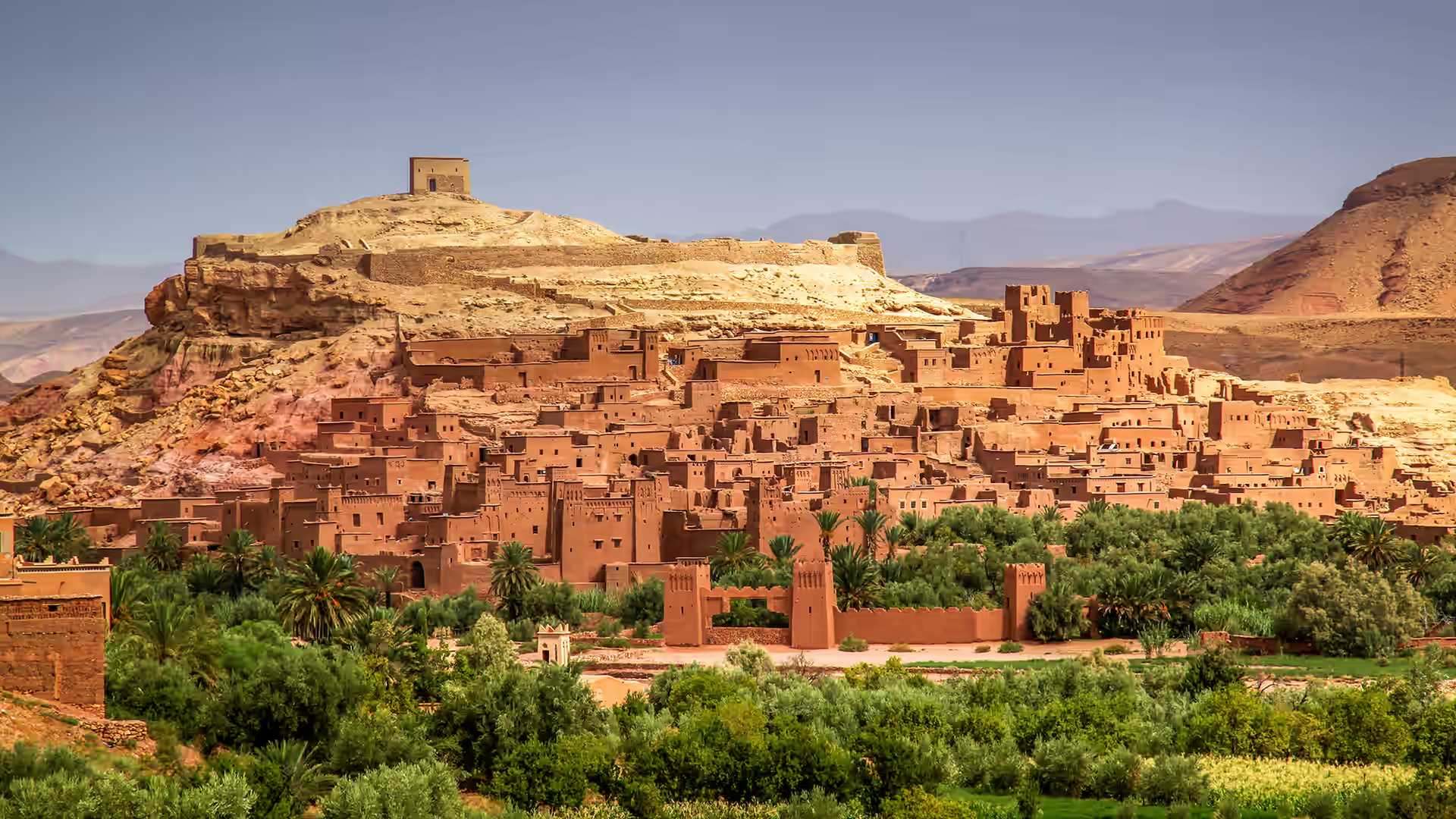
Christopher Nolan shot the Morocco half of The Odyssey in three places you can actually stand in: Ait Benhaddou near Ouarzazate became Troy, the beaches of Essaouira became the shore where the wooden horse is dragged in, and the White Dune outside Dakhla became Calypso’s island. The film opened on 17 July 2026. Two of those three locations sit on roads we drive all the time — here is what is real, what was built for the camera, and how to see each one.
Where in Morocco was The Odyssey filmed?
The production spent 91 days shooting, spread across seven Moroccan regions — Ouarzazate, Ait Ben Haddou, El Haouz, Tahanaoute, Marrakech, Essaouira and Dakhla — before moving on to Sicily, the Peloponnese, Iceland, Scotland and Malta. Morocco carried the biggest share of it, which is not a surprise: this country has doubled for the ancient world since Lawrence of Arabia.
| Location | Plays | Getting there |
|---|---|---|
| Ait Benhaddou | Troy | 3.5 h from Marrakech over the Tizi n’Tichka; 30 km from Ouarzazate |
| Essaouira beaches | The shore where the horse comes in | 3 h west of Marrakech by CTM or Supratours bus |
| Dakhla — the White Dune | Ogygia, Calypso’s island | Fly from Casablanca or Marrakech, about 2 h |
| Ouarzazate | Production base, studio work | Same road as Ait Benhaddou, 30 km further |
| Tahanaoute & El Haouz | Foothill and mountain scenes | 40 min south of Marrakech |
Ait Benhaddou: the ksar that keeps getting cast
The ksar of Ait Benhaddou is a fortified mud-brick village on the old caravan road between the Sahara and Marrakech, UNESCO-listed since 1987, and by now one of the most filmed places on earth — Gladiator, Game of Thrones, Kingdom of Heaven, The Mummy. For The Odyssey the crew added roughly sixty structures around and above the existing village to turn it into Troy.
Set that expectation before you go: those additions were built for the camera, not for visitors. What you walk into is the ksar itself — the earthen towers, the climb to the old granary at the top, the Ounila river bed at the bottom. That is the part that has been standing for centuries, and honestly it is the better half.
- Entry: crossing into the ksar is free; individual kasbah houses charge 10–20 MAD, and the climb to the granary is worth it
- Timing: arrive before 9 am or after 5 pm — tour convoys land mid-morning and the light is flat and hard at noon
- Sleeping there: stay the night in the village opposite instead of day-tripping; the ksar at dawn, empty, is a different place
- Nearby: Ouarzazate’s Atlas Film Studios and the Museum of Cinema, 30 km on, keep standing sets from earlier productions
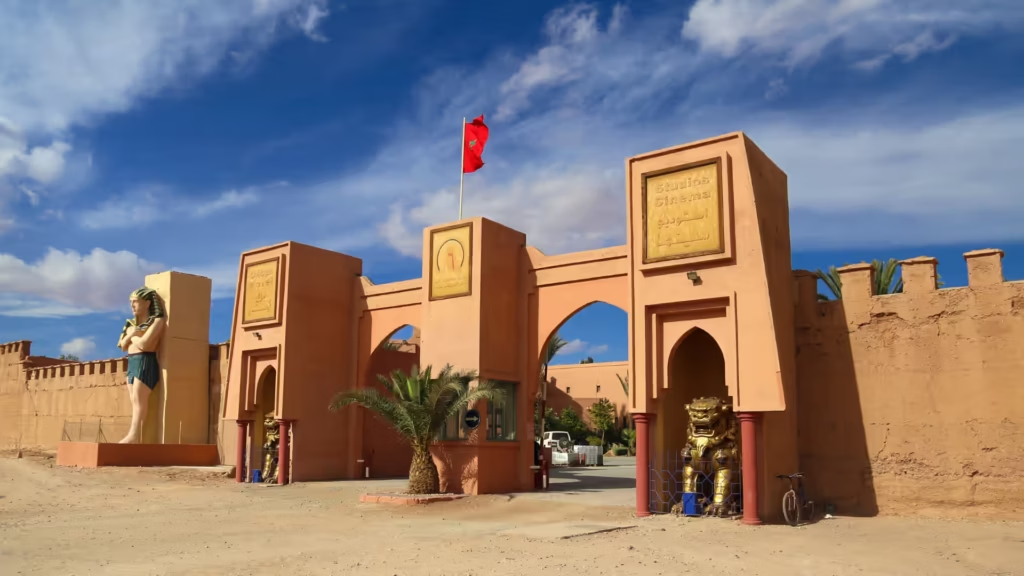
The practical point for anyone planning a trip: Ait Benhaddou is not a detour. It is the standard first-day stop on the Marrakech to Merzouga route, which means almost every 3-day desert tour already stops there for an hour. Ask for two.
Essaouira: the beach the horse washes up on
Essaouira’s long Atlantic beach stood in for the shore where the Trojan horse is discovered and where Odysseus launches for home. The town is a three-hour bus ride west of Marrakech, and the wind that makes it a kitesurfing capital — the alizes blow hard most afternoons — is exactly why it photographs like an ancient coastline: spray, haze, and nothing modern on the sand if you walk south toward Diabat.
Walk out past the fishing port at low tide and keep going. Twenty minutes gets you clear of the town and into the frame. Come between April and October if you want the light; come in winter if you want the storms.
Dakhla: the White Dune as Calypso’s island
The strangest and hardest to reach of the three. The White Dune — Dune Blanche — is a pale crescent of sand sitting directly in a turquoise lagoon about 40 km north of Dakhla, in Morocco’s far south. It played Ogygia, the island where Calypso keeps Odysseus for seven years, and you can see why it was picked: there is nowhere else in the country where desert and shallow sea meet like that.
Getting there is a flight, not a drive — roughly two hours from Casablanca or Marrakech, versus a bus ride of well over twenty. Most people who go are kitesurfers; the lagoon is world-class for it. If you are building a normal two-week Morocco trip, Dakhla is a separate journey rather than a stop, and I would not bolt it on for the film alone.
Can you build a trip around the filming locations?
Two of the three fit together easily. Marrakech is the hinge: Essaouira is a day trip or an overnight to the west, Ait Benhaddou is the first leg of the desert road east. Do it in this order and nothing is wasted:
- Days 1–2: Marrakech, then the bus to Essaouira — one night on the coast, morning on the beach
- Day 3: back to Marrakech, over the Tizi n’Tichka, sleep at Ait Benhaddou
- Days 4–6: carry on east — Ouarzazate, the gorges, and the dunes at Merzouga, which is where the road was always going
That is a six-day frame; stretch or trim it with the Morocco itineraries, and pick your month with the best time to visit guide — the Atlas passes and the desert do not share a season. If you are here for the pictures, the landscape photography guide covers the light that made these places castable in the first place.
Where in Morocco was The Odyssey filmed?
Across seven regions: Ait Benhaddou and Ouarzazate stood in for Troy, the beaches of Essaouira for the shore where the Trojan horse arrives, and the White Dune near Dakhla for Calypso’s island of Ogygia. Marrakech, Tahanaoute and El Haouz carried additional scenes across a 91-day shoot.
Can you visit the Troy set at Ait Benhaddou?
You can visit the ksar, but not the film set. The production added roughly sixty temporary structures for the shoot; they were built for the camera, not as an attraction. What remains is the UNESCO-listed mud-brick village itself, which is free to enter and open year-round.
How far is Ait Benhaddou from Marrakech?
About 180 km, or three and a half hours of driving over the Tizi n’Tichka pass. It is the standard first stop on the Marrakech to Merzouga desert route, so most 3-day desert tours already include it.
Is the White Dune in Dakhla worth the trip?
Only if you have time to spare or you kitesurf. Dakhla is a two-hour flight from Casablanca or Marrakech and sits far from every other Moroccan highlight, so it works as its own trip rather than as a stop on a first visit.
What else was filmed at Ait Benhaddou?
Gladiator, Game of Thrones, Kingdom of Heaven, The Mummy, Prince of Persia and Lawrence of Arabia among many others. The ksar has been doubling for the ancient world for more than sixty years, which is why the Ouarzazate studios exist at all.
Ait Benhaddou is one stop on a much longer road — the rest of the country is mapped in the Morocco travel guide, and the desert it leads to in the Sahara guide.