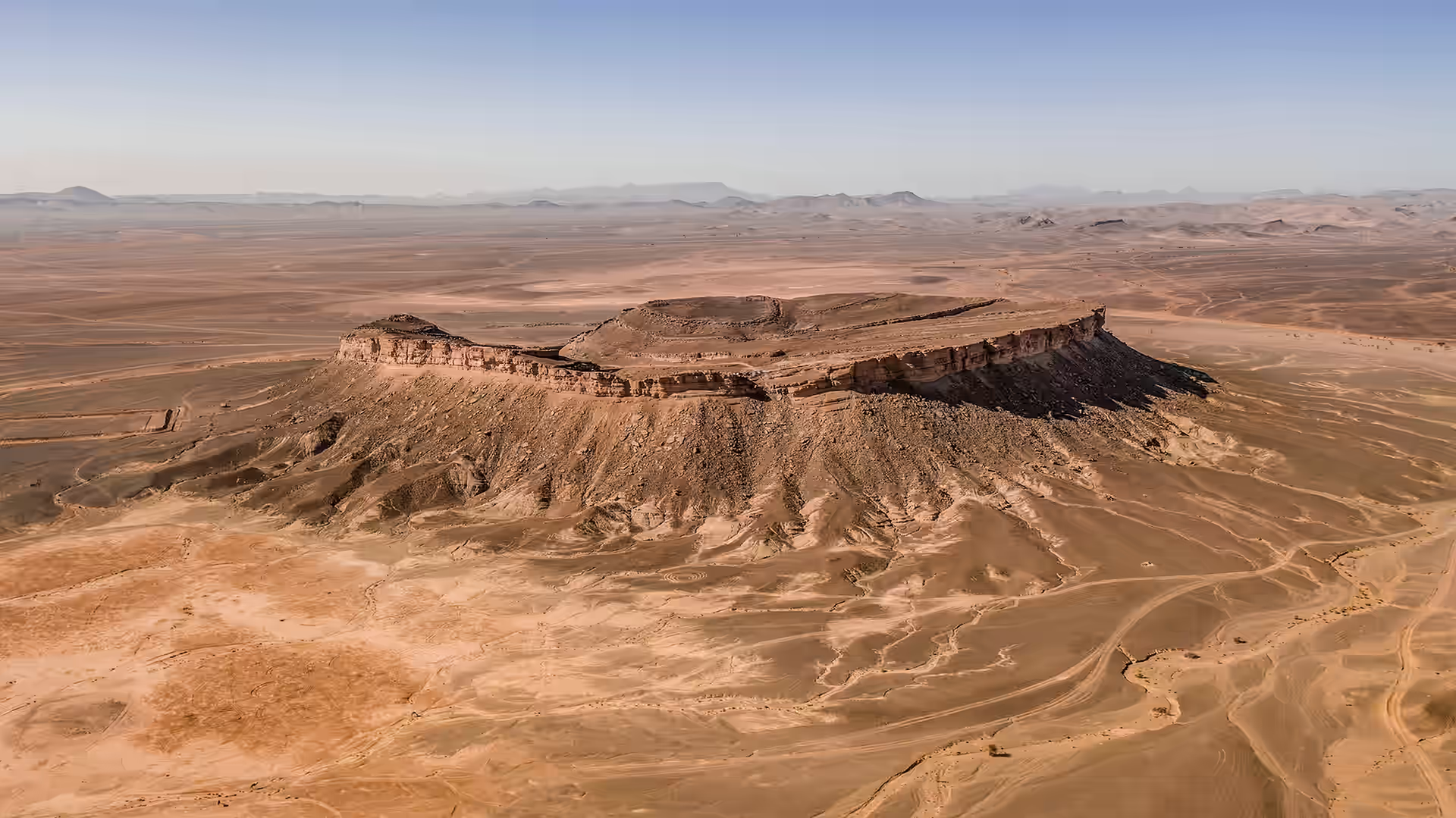
Rissani looks like a dusty desert town today, but it stands on the bones of Sijilmasa — for seven centuries the great caravan city where gold from the south was traded for salt, and the launch point for every caravan into the Sahara. The kasbahs of the Tafilalt scattered around it are the faded architecture of that wealth, and they are the most atmospheric, least-visited thing near Merzouga.
What was Sijilmasa?
From the 8th century, Sijilmasa was the northern port of the trans-Saharan gold trade — a walled city of merchants where camel caravans assembled for the crossing to Timbuktu and returned laden with gold and enslaved people. It minted its own coins, fed dynasties, and then, over centuries of conflict and shifting trade, crumbled into the palm groves. Rissani is its living descendant.
The kasbahs of the Tafilalt
A short loop south of Rissani — the Circuit Touristique — links a string of ksour and kasbahs: the Ksar Abbar, the mausoleum of Moulay Ali Cherif (founder of the ruling Alaouite dynasty, whose cradle this region is), and crumbling fortified granaries the colour of the earth they are made from. Some are restored, most are romantically half-ruined, and almost none are crowded.
Gara Medouar, the natural fortress
A few kilometres out, a horseshoe of rock rises from the plain — Gara Medouar, a natural amphitheatre used for centuries as a caravan stronghold and, more recently, as a film location. Standing in the middle of it, you understand instantly why the caravans stopped here: shelter, a vantage, and water below the surface.
How to see it
Rissani is 40 minutes from Merzouga, so this is an easy half-day from the dunes — hire a grand taxi or ask your camp to arrange the kasbah loop, ideally ending at the Rissani market on a souk day (Sunday, Tuesday, Thursday). It pairs naturally with the desert; see what to expect in Merzouga.
What was Sijilmasa?
Sijilmasa was a medieval caravan city near modern Rissani, the northern hub of the trans-Saharan gold-and-salt trade for around seven centuries. It declined over time and now survives only as ruins in the palm groves, with Rissani as its successor.
Are the Rissani kasbahs worth visiting?
If you like history and quiet, very much — the Tafilalt kasbah loop and Gara Medouar are atmospheric, uncrowded, and just 40 minutes from Merzouga, making them an easy and rewarding half-day from the dunes.
Why is Rissani important to Morocco’s history?
It is the cradle of the Alaouite dynasty, Morocco’s current ruling family, whose founder is buried nearby at Moulay Ali Cherif. That, plus its role as the old caravan gateway, gives the region outsized historical weight.
The kasbahs are a side trip from the dunes: the desert itself is covered in the Sahara guide, and the whole country in the Morocco travel guide.