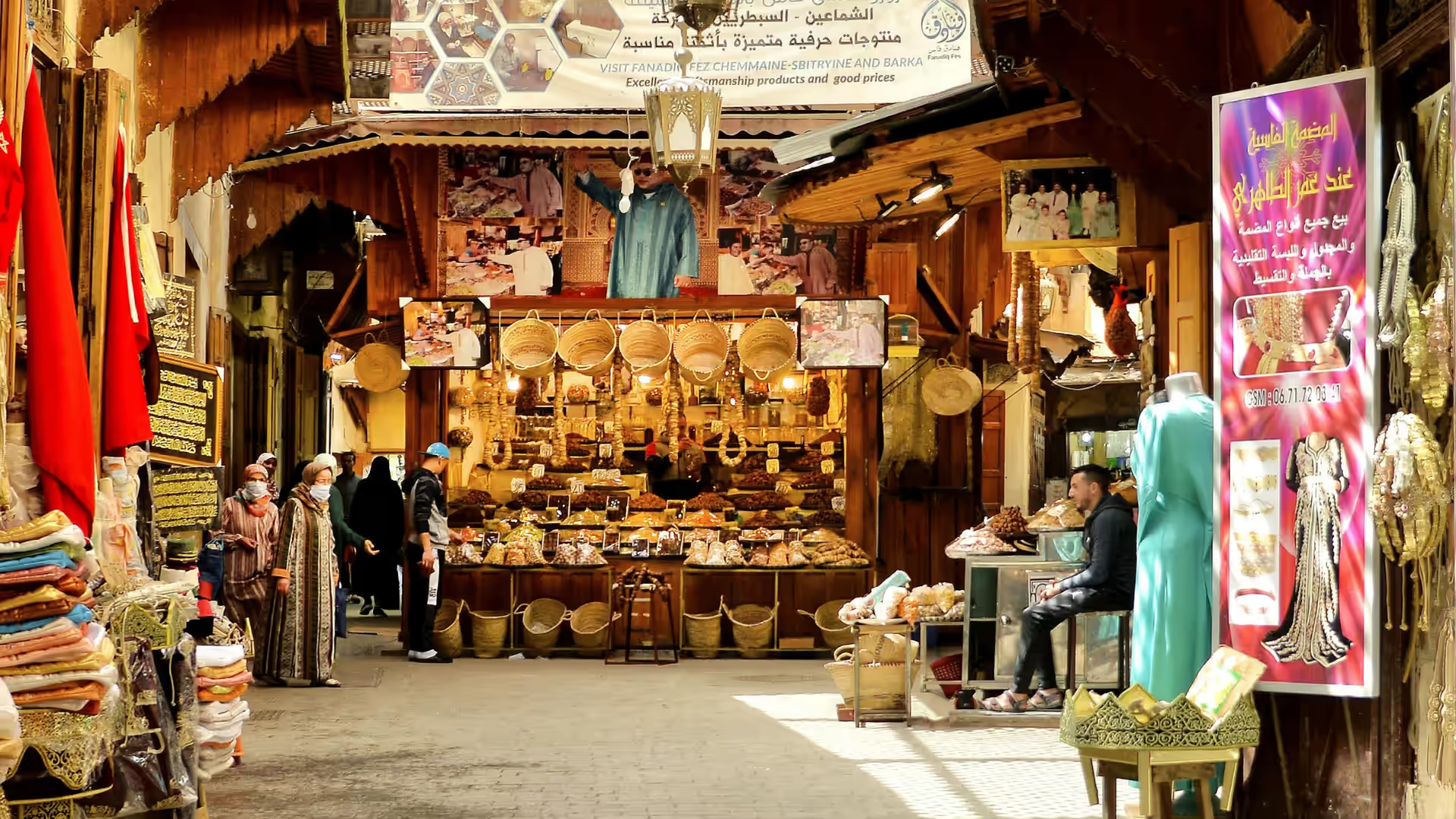
Yes — Morocco is broadly safe for travellers, including solo ones. Violent crime against tourists is rare; what you will meet instead is hustle — persistent selling, unofficial “guides”, inflated prices. Annoying, not dangerous. This guide is written from the local side of that equation: what is real, what is theatre, and what deserves actual caution.
What does the hustle actually look like?
In Marrakech and Fes medinas: someone insists the square is “closed” and offers to lead you elsewhere; a henna artist grabs a hand and demands payment; a helpful stranger walks you to your riad then demands a guiding fee. The counter-move is the same everywhere — a firm, smiling “la, shukran” (no, thanks) and keep walking. Nobody escalates.
The scams worth knowing before you land
- “That way is closed” — it is not. It is a detour to someone’s shop.
- Unmetered taxis — agree the fare before the door closes, or insist on the meter (“compteur”).
- The friendly tannery/spice “tour” — free until the exit-through-gift-shop pressure.
- Fake official guides — licensed guides carry a badge; book through your riad if you want one.
- Photo animals — touch the monkey or snake in Jemaa el-Fnaa and a fee follows.
Is Morocco safe for solo women?
Thousands of women travel Morocco solo every month and most report the same thing: constant low-level attention — comments, stares, invitations — that is wearing but almost never physical. What helps, honestly: dressing to local rhythm (shoulders and knees covered reads as respect, not submission), sunglasses and headphones as social armour, riads over hostels in conservative towns, and not walking medina alleys alone after midnight — the same rule locals keep.
What deserves real caution?
Traffic — the genuine hazard. Cross roads like locals do, in groups, unhurried. Mountain roads at night (take day buses). Pickpockets in packed squares — front pockets, zipped bags. And drugs: endless offers around Chefchaouen, serious legal consequences; decline and move on. Emergency numbers: 19 (police, from any phone) and 15 (ambulance).
The verdict from the road
Treat the hustle as weather — predictable, survivable, occasionally funny — and Morocco is one of the friendliest countries you will cross. Every guide on this site, starting with the Morocco travel guide, assumes independent travel precisely because it is safe to do.
Is Marrakech safe at night?
The main squares and busy medina arteries, yes — they are lively until late. Empty alleys after midnight, use a taxi or walk with company, exactly as you would in any big city.
Can you drink the tap water in Morocco?
Locals do; travellers with sensitive stomachs usually stick to filtered or bottled water. Cooked street food from busy stalls is generally safer than a quiet restaurant’s salad.
Are the desert tours safe?
Yes — the route is a standard tourist corridor with sealed roads. The real risk is a cut-rate operator’s driving schedule; pick tours with two drivers or sane daily distances. See the Sahara guide for how to choose.
What should LGBTQ+ travellers know?
Same-sex relations are illegal under Moroccan law. In practice, discretion is the operating rule travellers follow: shared rooms are unremarkable, public affection (for any couple) is not local custom. Research current guidance before travelling.
More of the practical groundwork sits in the Plan Your Trip hub.
Reassured? Start planning the route.
The Morocco travel guide